Flour Only Becomes Food When Water Arrives

Your starter jar is not just a quiet paste. The moment water meets flour, a whole invisible preparation process begins.
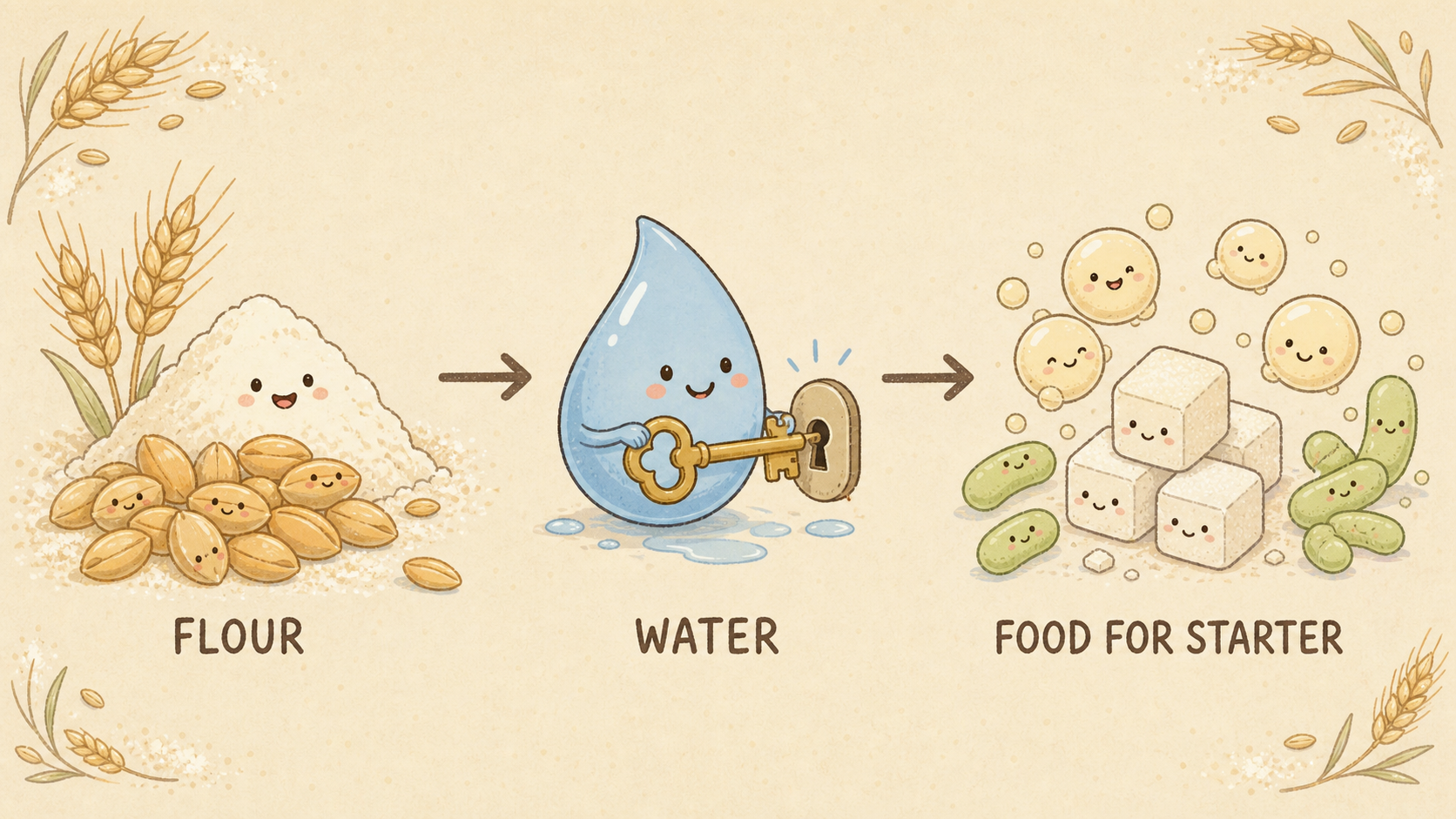
Flour looks like powder, but it is not lifeless material. It comes from a wheat kernel: bran on the outside, endosperm and germ on the inside. In nature, when wheat meets water, it begins to germinate and draws energy from the endosperm to feed its own growth.
In bread making, we borrow that same mechanism. Only this time, the ones being fed are not the wheat germ, but the wild yeast and lactic acid bacteria in your starter.
Bread Is an Energy Relay
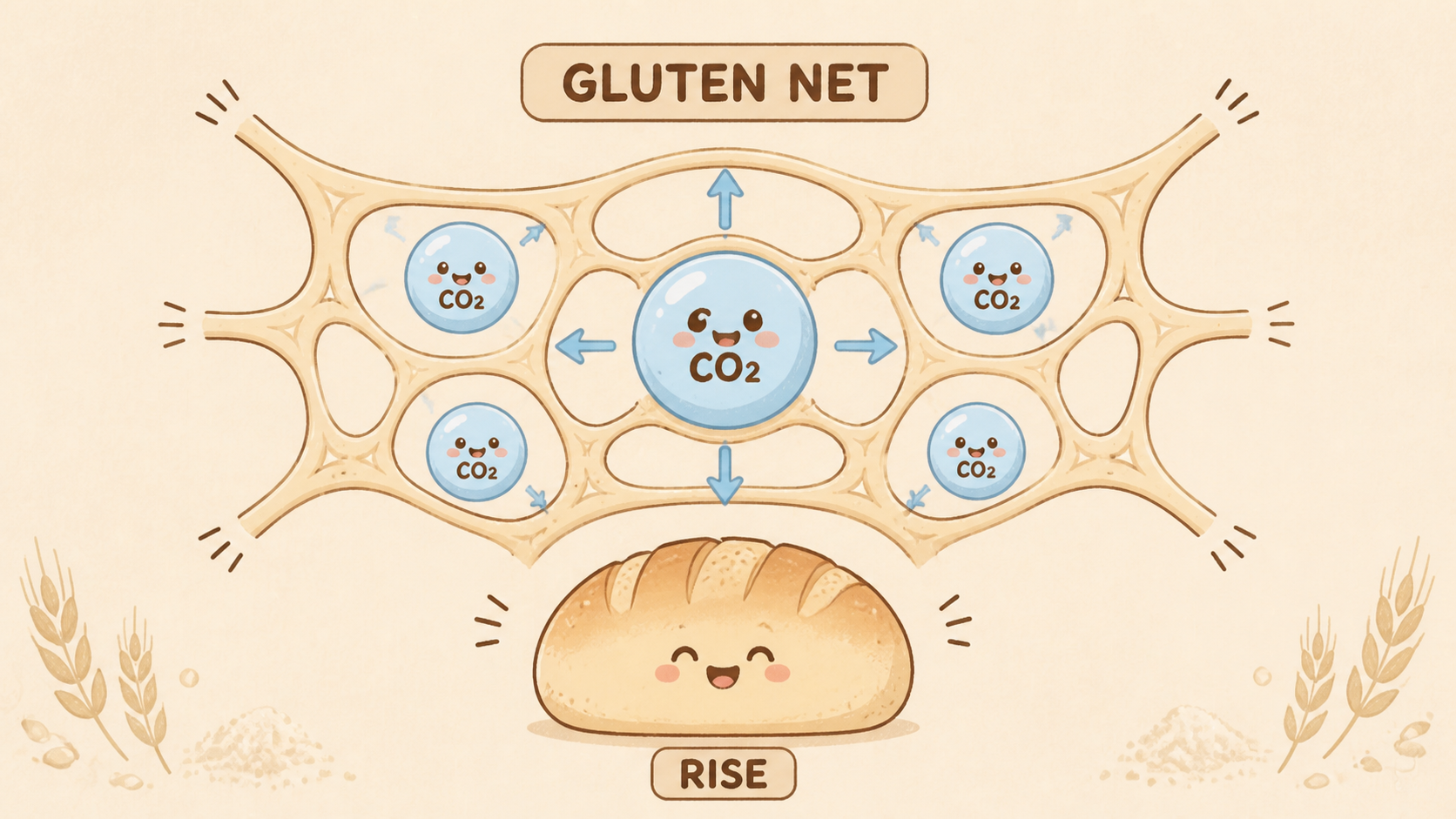
First, flour and water become dough. The proteins form a gluten network that is elastic, extensible, and able to trap gas. The starter begins to consume sugars, releasing carbon dioxide and acids. The gas gets caught inside the gluten network, and the dough slowly expands. Finally, heat from the oven sets this temporary structure into bread.
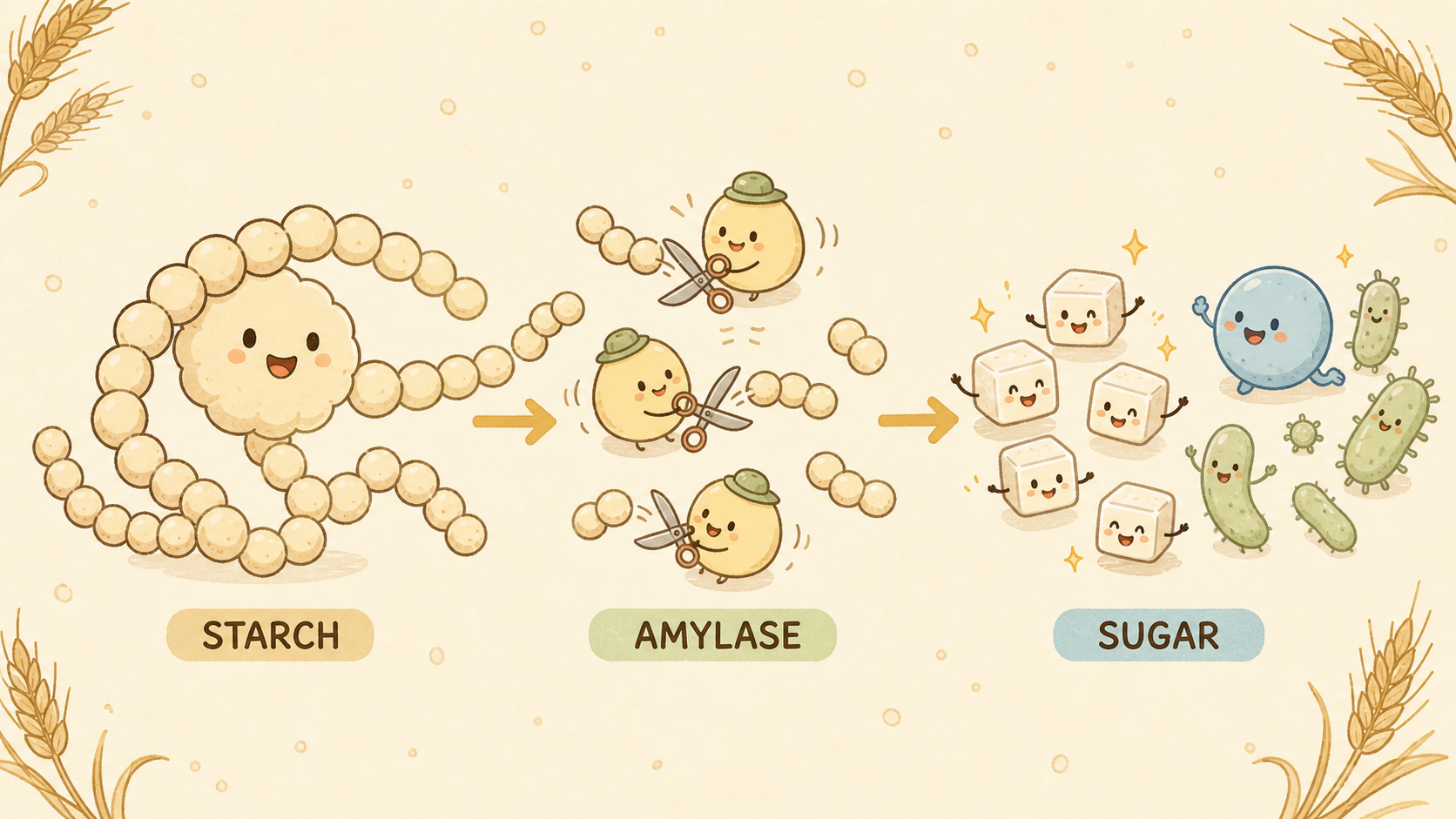
The starch system provides food. Starch must first be broken down by enzymes into smaller sugars before yeast and bacteria can use it.
The protein system builds structure. The better the gluten network, the better the dough can hold on to gas.
Water Is Not a Supporting Actor. It Is the Switch.
Flour alone stays quiet. Add water, and the enzymes inside flour begin to work. Starch is slowly broken into smaller sugars, and the dough becomes more relaxed and easier to stretch.
This is why autolyse works. It is not just "letting the dough rest." It gives flour and water time to do part of the preparation before the starter enters the scene.
How to Use This in Your Baking
If your dough feels tight and hard to stretch, autolyse may help it relax. If your starter is not very active, proper hydration can help flour release more usable sugars. But if your flour has high enzyme activity, contains a lot of whole grain, or your room is warm, too long an autolyse can make the dough overly soft and sticky.
What This Chapter Really Wants You to Remember
Do not think of starter only as "the thing that makes bread rise." Whether a starter can work well depends first on whether flour and water have prepared enough food for it.